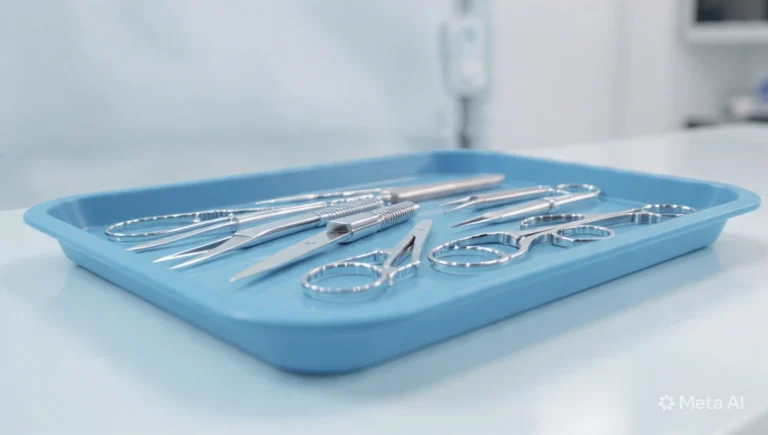
For over a century, stainless steel has served as the undisputed gold standard in surgical instrument manufacturing. Its durability, resistance to rust, and cost-effectiveness made it an indispensable pillar of modern healthcare. However, as surgical techniques have evolved moving toward ultra-precise micro-surgery, minimally invasive procedures, and high-strength MRI environments the demands placed on surgical tools have increased dramatically.
Today, advanced titanium surgical instruments are transforming surgical suites across the globe. By delivering unparalleled strength, reduced surgeon fatigue, and complete magnetic immunity, titanium isn’t just rivaling stainless steel, it is actively redefining surgical performance.
1. Superior Ergonomics & Reduced Surgical Fatigue
One of the most immediate advantages surgeons notice when switching to titanium instruments is the dramatic reduction in weight. Titanium alloys (typically Grade 5 Ti-6Al-4V) are approximately 40% to 45% lighter than surgical grade stainless steel, while maintaining equal or superior tensile strength.
In lengthy microsurgical, neurosurgical, or cardiovascular procedures that span 6 to 12 hours, holding heavy stainless steel forceps or needle holders can induce micro-tremors and hand fatigue. Titanium’s lightweight composition minimizes physical strain, empowering surgeons to maintain optimal tactile feedback and hand stability during critical maneuvers.
2. 100% Non-Magnetic & MRI Compatible
Stainless steel instruments, even austenitic grades, can retain minor magnetic susceptibility. In modern intraoperative MRI (iMRI) environments or hybrid operating suites, steel instruments pose serious safety risks due to magnetic displacement and imaging artifacts.
Titanium is completely non-magnetic (paramagnetic with negligible magnetic susceptibility). This key property makes titanium surgical tools mandatory for procedures conducted inside or adjacent to high-field magnetic resonance imaging equipment, ensuring zero attraction forces and artifact-free imaging.
3. Exceptional Corrosion Resistance & Longevity
While standard stainless steel relies on a thin chromium oxide layer to prevent corrosion, repeated exposure to harsh saline solutions, enzymatic detergents, chemical disinfectants, and high-temperature autoclaving can lead to pitting, staining, and surface degradation over time.
Titanium naturally forms an oxide film that provides near-indestructible resistance to corrosion, aggressive chemicals, and biofluids. Titanium instruments will not rust, pit, or corrode drastically extending their operational lifespan and lowering long term replacement costs for medical institutions.
Titanium vs. Stainless Steel: At-a-Glance Comparison
| Performance Metric | Titanium Instruments | Stainless Steel Instruments |
| Weight Density | ~4.43 g/cm³ (40%+ Lighter) | ~7.9 g/cm³ (Heavier) |
| Magnetic Properties | Non-Magnetic (100% MRI Safe) | Mildly to Moderately Magnetic |
| Corrosion Resistance | Exceptional (Rust & Chemical Proof) | Moderate to High (Prone to pitting) |
| Flexibility & Elasticity | High Spring Memory & Tactile Return | Rigid, Prone to permanent bending |
| Biocompatibility | 100% Biocompatible & Non-allergenic | High (Risk of Nickel reaction) |
| Color Anodization | Native Oxide Layers (No chipping) | Requires Plating / External Coating |
4. Enhanced Biocompatibility & Hypoallergenic Safety
A small percentage of patients and healthcare workers suffer from nickel or chromium hypersensitivities. Stainless steel contains variable amounts of nickel alloys. Titanium is 100% biocompatible, non-allergenic, and chemically inert, virtually eliminating tissue toxicity risks during delicate operative procedures.
5. Color Anodization for Immediate Tool Identification
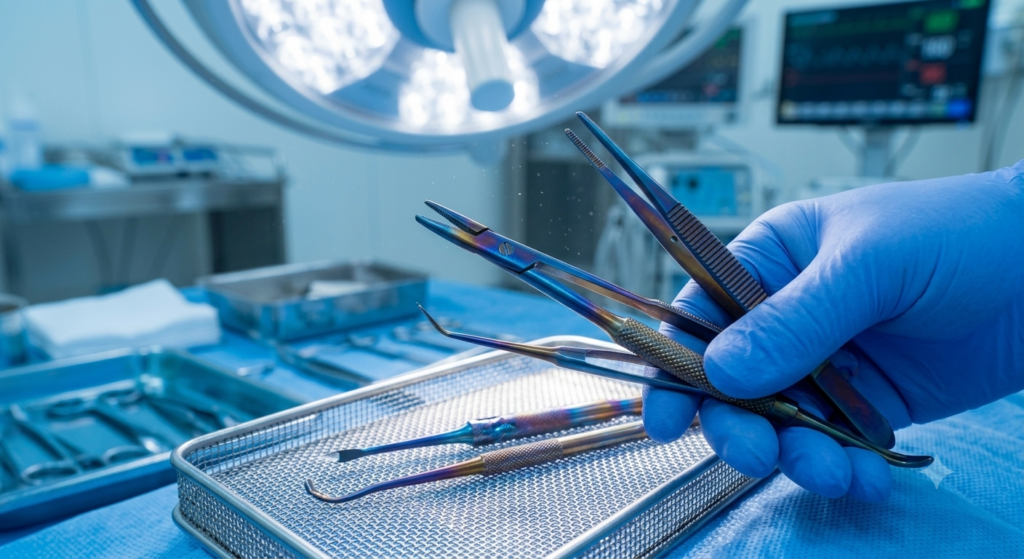
Titanium possesses a unique electrochemical characteristic: it can be anodized to create distinct, durable color coatings (blue, gold, magenta, green) without using chemical dyes or external surface coatings. This allows surgical teams to quickly categorize and identify instruments during high-stress procedures, reducing prep times and human error in the OR.
Key Takeaway for Hospital Procurement
While the initial acquisition cost of titanium surgical tools is higher than traditional stainless steel, titanium delivers a significantly lower Total Cost of Ownership (TCO) due to its extended lifecycle, resistance to reprocessing damage, and performance efficiency in specialized surgical departments.
Conclusion: Investing in the Future of Surgical Precision
While stainless steel will remain a dependable workhorse for standard general instrumentation, titanium represents the future of specialized, microsurgical, and intraoperative technology. For surgical teams demanding ultimate precision, reduced fatigue, and uncompromised safety, titanium instruments are the clear choice.
Upgrade Your Surgical Suite with Conigx
Explore Conigx Instruments’s premium range of engineered titanium forceps, needle holders, micro-scissors, and retractors. Contact our specialists today to request a catalog or schedule a product demonstration.